


Showing posts with label Kabbalah. Show all posts
Showing posts with label Kabbalah. Show all posts
Friday, October 10, 2014
Sunday, December 1, 2013
Ayn Sof.
In Kabbala there is the concept of "Ayn Sof"
'Ein Sof (or Ayn Sof) (Hebrew אין סוף), in the Kabbalah, is understood as Infinite Divinity. Ein Sof may be translated as "no end", "unending" or Infinite. Ein Sof is the Divine Origin of all created existence: this is in contrast to the Ein (or Ayn), which is infinite no-thingness [1]. According to Gershom Scholem, Ein Sof is the Emanator of the sefirot. Sefirot are energy emanations found on the Kabbalist Tree of Life. Ayn Sof, the Ancient of All Ancients emanates the sefirot into the cosmic womb of the Ein in a manner that results in the created universe.'
From this we see that all emanates from HaShem.
Nothing that we do or say can add one minuscule to the reality of HaShem. He was and is and will be. He is within and without Himself.
Nothing that we do or say can add one minuscule to the reality of HaShem. He was and is and will be. He is within and without Himself.
And yet.....
This is a cornerstone scripture.
Now comes the paradigm shift.
Now comes the paradigm shift.
As humans we tend to project inwards rather than projecting outwards. When we do this, even for the noblest of reasons, we are still tainted with ego. I , for one am guilty of this. My shoes are always ...... from stepping in it.
When we say that we endure hardships in order to be refined and become better persons for it, whilst it does contain an element of truth in it, it is still bordering on the self. How do I feel, what did I get out of it,will I be saved, etc.
When we endure for the sake of self, we have missed the plot.
When we endure for the sake of others, then bull's eye.
When we endure for the sake of self, we have missed the plot.
When we endure for the sake of others, then bull's eye.
Creation was based on one element alone. HASHEM PROJECTED OUT FROM AYN SOF AND GAVE FORM TO HIS INDIVISIBILTY THROUGH MULTIPLICITY AND THEN BRING THAT MULTIPLICITY INTO UNITY THROUGH MAN - ADAM, BOTH MALE AND FEMALE.
That was the purpose of creation albeit in a very abstract explanation. This reflected on man being dependent on HaShem as the source of Ayn Sof. This is reflected in the quoted Psalm above.
There is a rabbinic dictum that a man must first engage in a profession, then build a house and then find a wife, similarly HaShem engaged in the profession of Creator, built the Earth to sustain mankind and then created them.
Just think how we in the modern world have everything in the wrong order.
That was the purpose of creation albeit in a very abstract explanation. This reflected on man being dependent on HaShem as the source of Ayn Sof. This is reflected in the quoted Psalm above.
There is a rabbinic dictum that a man must first engage in a profession, then build a house and then find a wife, similarly HaShem engaged in the profession of Creator, built the Earth to sustain mankind and then created them.
Just think how we in the modern world have everything in the wrong order.
Man had other ideas of creating his own reality based on independence and ego.
Hence the fall and the need for redemption.
So redemption is not just from - Egypt, Babylon, the nations. These serve as prototypes.
The true redemption is from SELF.
Hence the fall and the need for redemption.
So redemption is not just from - Egypt, Babylon, the nations. These serve as prototypes.
The true redemption is from SELF.
So, you may call it ego, yetzer hara, the satan, or whatever you may like.
The antidote?
Project yourself out..... away from self.
Suffering comes to our aid as it teaches us empathy as a matter of due diligence and correction if need be.
Some may view it purely as correction, but I prefer to see and understand the ramifications of empathy.
This teaches me to be long suffering for the sake of others and to reach out beyond myself.
The antidote?
Project yourself out..... away from self.
Suffering comes to our aid as it teaches us empathy as a matter of due diligence and correction if need be.
Some may view it purely as correction, but I prefer to see and understand the ramifications of empathy.
This teaches me to be long suffering for the sake of others and to reach out beyond myself.
HaShem is long suffering . Just imagine how He sees the world at this very moment and yet he projects out.
This is the law of giving rather than taking. He sustains regardless.
This is the law of giving rather than taking. He sustains regardless.
Now, back to suffering. Why ?
What I can say is that death is the ultimate suffering.
We aspired to independence in Gan Eden.
At the moment of death we ultimately surrender our ego to HaShem and pronounce with our last breath our dependence on Him as sole sustainer of life.
What I can say is that death is the ultimate suffering.
We aspired to independence in Gan Eden.
At the moment of death we ultimately surrender our ego to HaShem and pronounce with our last breath our dependence on Him as sole sustainer of life.
The purpose of life is to understand and experience this in the here and now.
What better way to enact this than to give at the expense of self. This creates ECHAD or oneness.
Those that are obedient will be worthy of redemption from death , both from a living death of walking in darkness and the sleeping death of eternity.
What better way to enact this than to give at the expense of self. This creates ECHAD or oneness.
Those that are obedient will be worthy of redemption from death , both from a living death of walking in darkness and the sleeping death of eternity.
His indivisibility must become our indivisibility. Why ? Because we were created in His image.
Torah Judaism is dedicated to universal redemption.
The role of Mashiach is to be the catalst that unifies the Ayn Sof of HaShem , through his rejection of ego, suffering , death to self and resurrection to empathy. This is manifested not only in him but as the Yechida or the collective neshamot (souls) of his people Yisrael. As their representative, all is bound in him. This then gives credence to the calling of Yisrael being a Ohr l'Goyim - A Light unto the Nations. Something to ponder this Chag Urim - Festival of Lights.
Shavua Tov v'Chanukah Sameach
Joe.
Torah Judaism is dedicated to universal redemption.
The role of Mashiach is to be the catalst that unifies the Ayn Sof of HaShem , through his rejection of ego, suffering , death to self and resurrection to empathy. This is manifested not only in him but as the Yechida or the collective neshamot (souls) of his people Yisrael. As their representative, all is bound in him. This then gives credence to the calling of Yisrael being a Ohr l'Goyim - A Light unto the Nations. Something to ponder this Chag Urim - Festival of Lights.
Shavua Tov v'Chanukah Sameach
Joe.

Wednesday, November 27, 2013
The Bahir

"The Bahir Illumination," by Rabbi Nehunia ben haKana who was a master of the first century esoteric school of Judaism..... a contemporary of the author of the Zohar, Rabbi Shimon bar Yochai.
| ב וְהָאָרֶץ, הָיְתָה תֹהוּ וָבֹהוּ, וְחֹשֶׁךְ, עַל-פְּנֵי תְהוֹם; וְרוּחַ אֱלֹהִים, מְרַחֶפֶת עַל-פְּנֵי הַמָּיִם. | 2 Now the earth was unformed and void, and darkness was upon the face of the deep; and the spirit of God hovered over the face of the waters. |
| ג וַיֹּאמֶר אֱלֹהִים, יְהִי אוֹר; וַיְהִי-אוֹר. | 3 And God said: 'Let there be light.' And there was light. |
I have underlined in red the Hebrew words "Tohu v'Vohu."
Although "Tohu v'Vohu" usually have the simple connotation of chaos and desolation, they are here described as the basic ingredients of creation.
HaShem gives existence to all things, and is therefore the ultimate Giver. Creation, on the other hand, must receive its very existence from HaShem, and is therefore the ultimate receiver.
Another important principle is the fact that HaShem is an absolutely simple Unity, and cannot be described by any qualities whatsoever. Every concept that is necessary for creation must therefore also be created. As we see, two of the most basic of these are the concepts of giving and receiving. In Kabbalistic terminology, the concept of giving is referred to as "Light," while that of receiving is called a "Vessel."
The original Vessels consisted of the Ten Sefirot in their most primitive form. In this state, they could not interact with each other, and hence, could not give anything to each other. All they could do was receive from HaShem.
In order to receive HaShem's Light, however, a Vessel must in some way be connected to HaShem. The basic difference between the spiritual and the physical is the fact that space does not exist in the spiritual, and hence, there is no way in which the Sefirot can be physically connected to HaShem. The only possible relationship is therefore resemblance. Therefore, in order to receive HaShem's Light, the Vessel must, at least to some degree, resemble HaShem.
This presents a difficulty. If HaShem is the ultimate Giver, whilst the Vessel only receives, the two are then absolute opposites. Therefore, in order for a Vessel to properly receive, it must also give.
What is therefore needed is a Vessel that gives as well as receives. The ultimate Vessel is man. If man is to receive HaShem's Light, he must first resemble HaShem by being a giver. This he does by keeping HaShem's commandments, and thereby providing spiritual sustenance to the supernal worlds. Before he can do this, however, he must also resemble HaShem by having both free will and free choice, and this is only possible when both evil and good exist.
The first stage of creation is called the Universe of Chaos or Tohu. This is a state where the Vessels, which were the primitive Ten Sefirot, could receive HaShem's Light, but could neither give nor interact. Insofar as they did not resemble HaShem, these Vessels were incomplete, and therefore could not hold the Light. Since they could not fulfill their purpose, they were overwhelmed by the Light and "shattered," this being the concept of the "Breaking of the Vessels."
It is for this reason that these Vessels are called Tohu, which comes from the root word meaning "confounded." When a person is confounded, it means that he is perceiving an idea that his mind cannot hold. Similarly, the Vessels of Tohu - Chaos received a Light that they could not hold. Just like confusion and confoundment shatter the thought process, so these Vessels were shattered.
The broken pieces of these Vessels fell to a lower spiritual level and subsequently became the source of all evil. It is therefore said that Tohu-Chaos is the source of all evil.
The reason why the Vessels were originally created without the ability to hold the Light was so that evil should come into being, thus giving man freedom of choice, which was necessary for the rectification of the Vessels. Furthermore, since evil originated in the highest original Vessels, it can be rectified and re-elevated to this level.
This Breaking of Vessels, is alluded to in the Midrash, which states that "HaShem created universes and destroyed them" (Bereshit Rabbah 3:7). It is also allude to in the Torah in the account of the Kings of Edom, at the end of Genesis 36. The death of each of these kings is said to infer the shattering of a particular Vessel and its fall to a lower level, such a fall being referred to as "death."
After having been shattered, the Vessels were re-rectified and rebuilt into Personifications (Patzufim). Each of these Personifications consists of 613 parts, paralleling the 613 parts of the body, as well as the 613 commandments of the Torah. These Personifications were then able to interact with each other. More important, through the Torah they were able to interact with man, and therefore became givers as well as receivers.
In the rectified state, the Vessels were adequate to receive HaShem's Light. In Kabbalistic terminology, this state is called the Universe of Rectification or Tikkun. As here, it is called Vohu-Desolation.
Since the Vessels of Vohu can interact, there is said to be "peace" between them. Vohu is therefore seen as the sorce of peace.
Vohu is translated as "desolation, or more precisely,"emptiness." This represents the "emptiness" of a Vessel ready to receive. The word Vohu can also be read as two words, Vo Hu, literally, "in it is it" or "it is in it."
Kabbalists also speak of Tohu as the intermediate state between potential and realization. In their initial stage the Vessels only had potential existence, in the Infinite Being, and in this state, they could not comprehend at all. Their state of realization, on the other hand, is that of Vohu.
The husks or klipot derived from Tohu-Chaos are the forces that "confound people," and cause them to have misleading visions into the realm of impurity. A complete Vessel is a vision that contains a complete, understandable idea, whereas a broken vessel is one that is confounding and confusing. The state toward which one must strive is therefore Vohu, for it is what contains the true vision...... "it is in it."
The Light of Creation which is actually concealed at creation is the Light of Torah, as can be seen in this video presentation. This concealed light or "Ohr ha Ganuz" is the Light of Mashiach.... keeping in mind that the number 11 also represents Yosef ha Tzaddik who was the 11th son of Yaacov. Yosef ha Tzadik and Chanukah are synonymous.
Wishing you all a Chag Chanukah Sameach on behalf of Rav Katz and may HaShem fill your world with the Light of Torah..... the Ohr ha Ganuz, the hidden Light of Mashiach.
Chanukah Sameach
Joe.
Friday, August 16, 2013
The World of The Ger

Parashas Ki Seitzei
Oh
Rebbi! Where Are You Rebbe Akiva!
David Katz
*Note this particular article is written by david katz; in
short, it should be an expression that this is a yearning for those who passed
the tradition upon to this generation. To be called a rabbi in the same breath
with Rabbi Akiva is like the custom of today, to praise one’s self as Gaon in
light of the Vilna Gaon [in concept]. In this fashion, context in everything;
if Rebbe Akiva were to hear my discourse, I highly doubt it would be
appropriate to express my rabbinic title before his eyes. We are clearly not
the same, and the point of distinction is peshita. If King David said, "I am a Ger" then I am simply saying, "I am me."A word to the wise is
sufficient.
Four Walked into the Pardes… The Torah is repeated in
Devarim… From the mouth of God we heard two...And somehow there just is the
Ger, Toshav, and the Torah of the Ger Toshav. For context, let me introduce to
you Rebbe Akiva, and for that matter, the Rambam, and practically every great
Rabbi that ever lived – along with their righteousness and ability to emulate
God. For the record, every Gadol firmly understood the Ger, and thus it can be
assumed that they indeed Loved the Ger. Welcome to Parashas Ki Seitzei, which
will forever in my eyes be a recollection to Rebbe Akiva and his legacy that he
left us – a true Oral Torah that can’t be denied for all time, one that did not
come at the expense of the Gerim. To the soul’s delight, it is quite the
contrary, and a true Blessing of God to know the Ger.
Rebbe Akiva along with three others walked into the Pardes [mystical
realm] of Torah; the intentions of all four men are not clearly known. The fate
of each one was unique and different, paving a path of precedent for all future
seekers of absolute truth. Their legacy proves the nature of a harsh reality
when dealing with matters of God, as the life story of each, tells a story with
a surreal ending. It is assumed that each one was a decent individual prior to
his mystical experience, thus making the experience all the more powerful when
the fate of each is revealed.
Of the Four, one was killed, another went mad, Acher, [Rebbe
Meir’s teacher] became heretical, while only Rebbe Akiva came out unscathed.
The hindered three, each had a level of revelation of the Torah’s innermost dimension
that their wisdom took them to a place that measured short of its desired
destination. Rebbe Akiva on the other hand was quite different, for he had the
pre-requisite intellect to properly diagnose the vision that God had bestowed
up on him. The irony of Rebbe Akiva however, wasn’t in his living through it,
rather it was the way he died!
Moses is on record [for having his own Pardes moment so to
say] of questioning Hashem how Rebbe Akiva’s reward for greatness was to end up
having his skin combed from his body. This is as if to say that Rebbe Akiva
himself became a proverbial Pardes of understanding, a Job to Moses if you
will, as to why the righteous suffer so. The kabbalists explain that Rebbe
Akiva through his experience, had his soul join with the supremely righteous in
the upper realms, to the prevention of idolatry of his remains. [This is the
fate of the righteous to a certain extent, and the reason why Moses’ grave is
unknown; to prevent worship to the grave of the righteous, all the while the
grave/death is paramount to express mortality of man while soul has its place
in the will of God.] Thus all four men had a fate that is compelling to the
nature of their revelation and abilities.
Rebbe Akiva was unique in other ways as well as a great
Rabbi, for from his vision [or at least in conjunction with] the Talmud, Oral
Torah, Kabbalah, etc. was fashioned by his hands and supervision. With all of
this said, the greatest attribute of Rebbe Akiva was his style of
communication, expression, and delivery of the Torah Laws and concepts. Rebbe
Akiva for all intents and purposes became the master of revelation and
concealment and a form of proper Torah tradition of handing over from Rabbi to
Rabbi in a preservation of Torah of Sinai to this day, and until the Moshiach.
This skill would serve as the benchmark of the gold standard rabbinic
ordination that would define greatness and truth with Hashem, and grant the
Torah its proper refinement and integrity.
Rabbis have existed [on this level] from at least of the
days of Rebbe Akiva through the generation of the Rambam and onwards; only in
recent generations [primarily due to the Shoa] have the disciplines of Torah
been reduced to a remnant of our once dear titles of Rabbi/Rebbe, Gaon [genius
in Torah], etc. Thus to focus on the Rambam, we can better understand Rebbe
Akiva, the Torah, and all great Rabbinic works [such as the Zohar, authored by
the student of Rebbe Akiva]. The Rambam made usage of the famous dictum, “From
the mouth of God, I heard two.” This inspired the Rambam in his classic work,
and we can recall a famous saying, “From Moses until Moses, there never stood
another like Moses.” The basic premise is that Moses and the Rambam were both
named Moses, and both employed the duality to Torah in their works. Moses
called “his Book of Devarim” – “Mishna Torah” [the double Torah] while the
Rambam’s codified law works on the same principles and is called “Mishna Torah”
as well. Yet where the Rambam shows this hidden level of greatness buried
within the Torah, is seen in his dual title to codification, as he refers to
his work as “Yad Chazakah” as well [the strong hand].
The deeper meaning to the Rambam having two titles is reminiscent
to our Rebbe Akiva format of revealed/concealed Torah; such is the Rambam. When
the Rambam seeks to simply reveal, often to the student who plainly wishes to
do, while not rocking the boat [the beinoni], he may expect a harsh flavor to
the Rambam [which satisfies his inherent judgments and apparent desire to learn
this way; based on merit of understanding – Gra]. Under this pretext the Rambam
may be referred to as “Yad Chazakah” [strong hand]. Yet the Rambam carries the
double entendre edition inside as well, a code of law that is hidden and often
dormant to the uninitiated to the deeper dimensions of the Torah; this level of
revelation [as opposed to concealed] may be realized as the Mishna Torah [that
which is doubled, i.e. carries an additional weight and measure, drawing
comparison to Moses in the Book of Devarim.]
The point of difference between the two approaches is that
the former will yield judgment while the latter will express the true
compassion and truth of the Torah. One can surmise that this is the proverbial
shallow – depth to Torah ratios that exist in the yeshiva halls, often
following suit of he who is genuinely interested in what Hashem has to say in
His Holy Torah. It can be assumed that all students desire truth, while merit
determines the extent that they actually reach a particular level; thus the
Rambam caters to all members of Israel. This is exactly the skill brought down
by Rebbe Akiva, and was his merit in successful passage of the Pardes, as he is
on record of saying, “In the place of pure marble stone, do not say water water.
Rebbe Akiva, Rambam, Moses, etc. all personified the traits
of a perfect rabbinic tradition – the art of giving over Torah. They may be
men, and they may have had flaws, yet their style of passage and preservation
was fashioned into a vessel that holds its water. The true Torah of the sages is a Torah that
contains “From the mouth of God I heard Two” – and as much as our selected
Rabbis of Blessed Memory [the truest Gadolei Hador] had achieved this, perhaps
the best example of such depth is the Pardes itself, and her moments inside the
Torah of God, the Five Books of Moses, Sefer Devarim in particular – for it was
the seat of Moses’ highest communion with Hashem. Rebbe Akiva however, was the
first to make this part of Jewish tradition, and the biggest step in redemption
of the Ger.
It should be stated that Rebbe Akiva comes from Gerim, and
it is fitting that he brings to light the Torah of Gerim, as it shines out from
Pardes. Rebbe Akiva accentuates this principle in every nuance of Torah that is
uttered in his name, as his most profound teachings strongly incline to the
necessity of the double entendre; he may seem harsh, but within proper
perspective, a whole new world opens up
in Torah, the level of Sod – secret. The irony is, is that he has achieved this
all within the boundary of the revealed Torah, i.e. the Torah that bears no
restrictions on who is able to learn from these pearls of wisdom. Essentially,
Rebbe Akiva has single-handedly taught all future students, how to identify,
the Torah of, the World of the Ger, the basis of the Torah of Shem.
Parashas Ki Seitzei is the most Divine representation of
such elevation in Wisdom, for the whole Parasha is literally, “From the Mouth
of God I heard Two.” As much as we travel down intricate Jewish Teachings that
compose the World of the Jew, when we step back, and remember the Ger and Love
him, a sublime World of the Ger emerges. In short, if we are to review the
whole Torah in the mold of “Mishnah Torah” of Moses, this can be achieved with
one swoop of one’s focus, from Jew to Ger. As every Ger mention in the Torah
needs to be examined to the nature of the Ger reference [Toshav, Tzedek, Gamor,
etc.] so too does the Parasha teach and reinforce each verse, each letter, and each
word must be examined carefully, as it is a Ger, for in truth it is! [Sechel is
a Ger in this World – Torah intellect]
Once this is performed, our eyes become open and the World
of the Ger appears, and as it says often throughout the Torah, “It shall be one
law for you; the Native and the Ger.” It is my privilege to give over, a
tradition that goes back to Moses, and was typified by the greatest of sages,
and acknowledge that their efforts of illumination of the Ger is well received
in these last generations before Moshiach. To just be able to see what the
Divine hand has placed, so that there should be a Ger in the End of Days to
walk his righteous path of the Ger Tzedek would be worth being created. And
truth be told, from my point of view, none of this is made possible, if the
Gerim don’t bring Light to my eyes like Jethro before them.
If we are to be a Light to Nations, then I strongly suggest that
you first allow them to open your eyes and see this Divine Light. Parashas Ki
Seitzei is here every year just before Rosh Hashana, as an opportunity to see
the Light [of redemption] – and as Rebbe Akiva taught, Moses experienced, and
every Ger knows – “From the Mouth of God I heard Two.” For this is the Light we
hear in Parashas Ki Seitzei, and it allows us to savor the chance and blessing
to see the same Torah with new eyes, as we repeat the Torah with the King as He
enters the field, allowing us to finally see what was always there. Just to
open our eyes, circumcise our hearts, and embrace the Ger, as the Parasha so
graciously does, as an eternal example of truthfully Loving the Ger – then the
World will finally reflect the truth of the King constantly in the Field.
The result is a Third Temple for all of Mankind, an eternal
House of Prayer and Blessing to those who serve within His Holy Torah, and
allowed themselves to finally hear From the Mouth of God of which we heard two
[I am Hashem…You Should Have no other gods], symbolic of the harmony of Two Divine
Worlds coming together; simply expressed as God’s Love of the many types of
Gerim that echo within the halls of Ki Seitzei.
 |
| From Tzfas |
Audio Shiur On Parasha: Motzie Shabbos 11 P.M. [Tzfat Time]
Wednesday, March 27, 2013
If The Gra Were Nine
A Deep And Awesome View On Life From A 9-Year-Old - Watch More Funny Videos This kid will fly when he finds out the truth [in text] is what he is saying. Kol Hakavod, and Chag Sameach. Maybe we are in special times after all.

Friday, December 21, 2012
Secrets of Torah of Pilpul

 |
| Noahidenations.com |
Click Here For Parashas Vayigash - Just 1 Click Away!
Happy End of the World If You Are Mayan!
.gif)
Wednesday, November 28, 2012
The Torah's Secret of Hadar and Mehitavel [Hat Tip "Doc"]

לא וְאֵלֶּה, הַמְּלָכִים, אֲשֶׁר מָלְכוּ, בְּאֶרֶץ אֱדוֹם--לִפְנֵי מְלָךְ-מֶלֶךְ, לִבְנֵי יִשְׂרָאֵל. לב וַיִּמְלֹךְ בֶּאֱדוֹם, בֶּלַע בֶּן-בְּעוֹר; וְשֵׁם עִירוֹ, דִּנְהָבָה. לג וַיָּמָת, בָּלַע; וַיִּמְלֹךְ תַּחְתָּיו, יוֹבָב בֶּן-זֶרַח מִבָּצְרָה. לד וַיָּמָת, יוֹבָב; וַיִּמְלֹךְ תַּחְתָּיו, חֻשָׁם מֵאֶרֶץ הַתֵּימָנִי. לה וַיָּמָת, חֻשָׁם; וַיִּמְלֹךְ תַּחְתָּיו הֲדַד בֶּן-בְּדַד, הַמַּכֶּה אֶת-מִדְיָן בִּשְׂדֵה מוֹאָב, וְשֵׁם עִירוֹ, עֲוִית. לו וַיָּמָת, הֲדָד; וַיִּמְלֹךְ תַּחְתָּיו, שַׂמְלָה מִמַּשְׂרֵקָה. לז וַיָּמָת, שַׂמְלָה; וַיִּמְלֹךְ תַּחְתָּיו, שָׁאוּל מֵרְחֹבוֹת הַנָּהָר. לח וַיָּמָת, שָׁאוּל; וַיִּמְלֹךְ תַּחְתָּיו, בַּעַל חָנָן בֶּן-עַכְבּוֹר. לט וַיָּמָת, בַּעַל חָנָן בֶּן-עַכְבּוֹר, וַיִּמְלֹךְ תַּחְתָּיו הֲדַר, וְשֵׁם עִירוֹ פָּעוּ; וְשֵׁם אִשְׁתּוֹ מְהֵיטַבְאֵל בַּת-מַטְרֵד, בַּת מֵי זָהָב. מ וְאֵלֶּה שְׁמוֹת אַלּוּפֵי עֵשָׂו, לְמִשְׁפְּחֹתָם, לִמְקֹמֹתָם, בִּשְׁמֹתָם: אַלּוּף תִּמְנָע אַלּוּף עַלְוָה, אַלּוּף יְתֵת. מא אַלּוּף אָהֳלִיבָמָה אַלּוּף אֵלָה, אַלּוּף פִּינֹן. מב אַלּוּף קְנַז אַלּוּף תֵּימָן, אַלּוּף מִבְצָר. מג אַלּוּף מַגְדִּיאֵל, אַלּוּף עִירָם; אֵלֶּה אַלּוּפֵי אֱדוֹם, לְמֹשְׁבֹתָם בְּאֶרֶץ אֲחֻזָּתָם--הוּא עֵשָׂו, אֲבִי אֱדוֹם. {פ}
31 And these are the kings that reigned in the land of Edom, before there reigned any king over the children of Israel. 32 And Bela the son of Beor reigned in Edom; and the name of his city was Dinhabah. 33 And Bela died, and Jobab the son of Zerah of Bozrah reigned in his stead. 34 And Jobab died, and Husham of the land of the Temanites reigned in his stead. 35 And Husham died, and Hadad the son of Bedad, who smote Midian in the field of Moab, reigned in his stead; and the name of his city was Avith. 36 And Hadad died, and Samlah of Masrekah reigned in his stead. 37 And Samlah died, and Shaul of Rehoboth by the River reigned in his stead. 38 And Shaul died, and Baal-hanan the son of Achbor reigned in his stead. 39 And Baal-hanan the son of Achbor died, and Hadar reigned in his stead; and the name of the city was Pau; and his wife's name was Mehetabel, the daughter of Matred, the daughter of Me-zahab. 40 And these are the names of the chiefs that came of Esau, according to their families, after their places, by their names: the chief of Timna, the chief of Alvah, the chief of Jetheth; 41 the chief of Oholibamah, the chief of Elah, the chief of Pinon; 42 the chief of Kenaz, the chief of Teman, the chief of Mibzar; 43 the chief of Magdiel, the chief of Iram. These are the chiefs of Edom, according to their habitations in the land of their possession. This is Esau the father of the Edomites. {P}
These verses in the Torah are the root of all modern Kabbalistic thought, as they express in secretive terms the formation of creation, a process known as "Shvirat HaKelim" - The Breaking of the Vessels.
The 8th King, Hadar and his wife Mehitavel represent the level of repair, and thus didn't die. The Mekubalim all relate to us that the symbolism within "Hadar" the 8th King is to be compared to Moshiach and the Messianic Age. His wife carries the gematria that in some terms is the most significant in Kabalah: 97.
97 is the combined gematria of ס''ג and ב''ן which is 63 and 52, which represent male and feminine, thus 97 is their union, which the Arizal says would spawn a new "ס''ג" or 63. This would be akin to the progression into the Messianic Age, an age of Binah, or Understanding.
What I found to be interesting,, and posted several times is the notice that there have been 8 PM's of Israel since Rabin's assassination. The year of which he died, it seems the Zohar hints at being a year that geulah began on faint levels, a liberation from Erev Rav. He began the Erev Rav onslaught against Israel by really pushing forward "Land for Peace." Thus ever since it has been Erev Rav aggression against Holy Liberation in the background, that would culminate with Moshiach. In this case, Hadar and Mehitavel.
In this case, [in English] the verse would read:
וְאֵלֶּה, הַמְּלָכִים, אֲשֶׁר מָלְכוּ, בְּאֶרֶץ אֱדוֹם--לִפְנֵי מְלָךְ-מֶלֶךְ, לִבְנֵי יִשְׂרָאֵל
"and these are the "kings" that ruled in the Land; [a proxy of] Edom [i.e. Erev Rav] Lifnim / Inside - Lecha / to you - malach - ruled / Livni / Yisrael
Notice, Livni makes the whole connection work in the counting, and that she is oddly returning now. Yisrael would be the last "king" that ushers in the Messianic Kingdom [while not being Moshiach himself].
For more on Bibi see this post
To resolve contradictions [with Bibi davka] let's now explore the chracter Hadar according to the Seforim.
- The Hadar of the Pshat in the text is of the Klippah, i.e. my take on Bibi. This is because he is a King of Edom. This is strengthened by the allusions to money being worthless and hinting at an oil based economy.
- In Kedusha it represents the Highest Chesed, that which fixes the world, i.e. the evil from the breakage.
- Hadar represents the ו''ק the level of Zeir Anpin
- Hadar is the concept of the 7th madreiga, Malchus leading into the 8th [Hadar] which is Keter on this level.
- Hadar implies that Chesed will return, as the creation/breaking was from a strong din, i.e. a missing upper triad of Keter Chochmah and Binah.
- We learn from this how creation exists; physicality is "Mazal" - Jewish as a garment of light.
- As was mentioned, the "97" concept is the repair of Worlds.
These are the Kabbalistic allusions and main points to Hadar; the Messianic allusions are equally important.
One interesting note amongst the commentaries, is one of the Rashbam.
"We are not exact according to "pshuto" [as opposed to pshat] in names [in reference to Hadar] so much."
Unfortunately, this is often learned in a poor way, leading to severe misnagdic thought, i.e. that names are not important.
First of all, he says lefi pshuto, rather than pshat. He isn't saying that names don't have simple meaning, he is saying it is not required to spend time learning peripheral Torah from allusions in names, in a style of exegesis like Rashi, lefi pshuto.
The implications of this, are two-fold: that as I said, people think that names have no meaning - which is not what he said, and, that it can be implied that Kabbalistic thought should not be darshened out from names. Most of the Arizal's kabalah is in fact derived from the chochmah of names. [for example 208 = Isaac; 26 multiplied by 8, which kabbalistically has meaning]
What I believe he is really saying, is that we will not further ourselves in understanding of the text by over-exploring, or drawing from other sources that are brought in. In regards to the text and flow, a name is a name. However that does not mean that names are devoid of meaning or that kabalah can not be learned out from the Biblical characters, as the Arizal often does.
The problem that is seen here is a lack of learning skills to analyze the Rashbam clearly, which leads to bad philosophies in learning. To make this go full circle, that rationale is a direct tribute to the Erev Rav/Katan dynamic that hates the truth and seeks to destroy Am Yisrael.
The 8 Kings are an example of this, with the 8th King being a "different" type of Kli, yet still "Edomic." [in Klippah]
The true Hadar of Kedusha and the light of geulah will rid the world of the Erev Rav/Katan, and restore the truth of Torah. The Vilna Gaon says very clearly that Kabalah and Name Meanings usher in the geulah. He also goes on to glorify the kabalistic glory of Hadar, which can mean Glorified in one of its meanings.
As Hanukah is fast approaching, one of the main points of the winter chag is this concept of Hod V' Hadar, Majesty and Glory.
The mushel to explain it [Rav Hutner] is the following:
...to see a beautiful reed in its setting....along comes a terrible storm of which the reed waxes and wanes; will the reed survive it - one must wonder!...some time later, the reed is still seen standing erect, undaunted. certainly it was beautiful [hod] - but now, I know all that went into his beauty - and he lives on, despite his life - Hadar! [we have re-visited his beauty, for he was then beautiful, and now all the more so, as if it has returned - "Hadar" to his innate beauty - "Hod"]
Such were the Jewish People against Greece.
Hod V' Hadar
May we see Hadar in all of his/its Hod, on Chanuka ...and all the more so in the light of Geulah.
 |
| חג שמח |
Follow @RabbiKSoulMazal
Sunday, November 4, 2012


Wednesday, September 19, 2012
Pshat: Like A Dog Chasing His Tail
 |
| The [mad] Scientist on the Prowl |
In Torah, finding a Pshat to any matter of Torah is usually step one, and this first step will lead to a lifelong search for the Truth to the commited scholar. More often than not, even though his new pshat may have "answered" his desires, he will seek a more encompassing solution. This is where science and Torah have a schism: Torah always seeks the best answer, until absolute Truth, while the Scientist is satisfied from elementary clearance on the issue.
And now science is working on its conclusion of their pshat: that they have poskened a Universe, one of which God did not create. This is all the more silly being that they aren't even acknowledging the pshat of Bereishit, rather they are taking a pshita [simple and beyond obvious] at best...as if to say, that God introduces his Book of Creation with a poor man's pshita?! [ that a grade-schooler created the Universe]
It just doesn't seem to me, to be that hard to think to work science (if you are that compeleld to) into Bereishit. Science maybe would be truly cool if they would recognize Bereishit: go for a real pshat - people [!] and stop with the pshita's!
HuffingtonPost:
Over the past few centuries, science can be said to have gradually chipped away at the traditional grounds for believing in God. Much of what once seemed mysterious — the existence of humanity, the life-bearing perfection of Earth, the workings of the universe — can now be explained by biology, astronomy, physics and other domains of science.
Although cosmic mysteries remain, Sean Carroll, a theoretical cosmologist at the California Institute of Technology, says there's good reason to think science will ultimately arrive at a complete understanding of the universe that leaves no grounds for God whatsoever.
Carroll argues that God's sphere of influence has shrunk drastically in modern times, as physics and cosmology have expanded in their ability to explain the origin and evolution of the universe. "As we learn more about the universe, there's less and less need to look outside it for help," he told Life's Little Mysteries.
He thinks the sphere of supernatural influence will eventually shrink to nil. But could science really eventually explain everything?
Beginning of time
Gobs of evidence have been collected in favor of the Big Bang model of cosmology, or the notion that the universe expanded from a hot, infinitely dense state to its current cooler, more expansive state over the course of 13.7 billion years. Cosmologists can model what happened from 10^-43 seconds after the Big Bang until now, but the split-second before that remains murky. Some theologians have tried to equate the moment of the Big Bang with the description of the creation of the world found in the Bible and other religious texts; they argue that something — i.e., God — must have initiated the explosive event.
However, in Carroll's opinion, progress in cosmology will eventually eliminate any perceived need for a Big Bang trigger-puller.
As he explained in a recent article in the "Blackwell Companion to Science and Christianity" (Wiley-Blackwell, 2012), a foremost goal of modern physics is to formulate a working theory that describes the entire universe, from subatomic to astronomical scales, within a single framework. Such a theory, called "quantum gravity," will necessarily account for what happened at the moment of the Big Bang. Some versions of quantum gravity theory that have been proposed by cosmologists predict that the Big Bang, rather than being the starting point of time, was just "a transitional stage in an eternal universe," in Carroll's words. For example, one model holds that the universe acts like a balloon that inflates and deflates over and over under its own steam. If, in fact, time had no beginning, this shuts the book on Genesis. [Big Bang Was Actually a Phase Change, New Theory Says]
Other versions of quantum gravity theory currently being explored by cosmologists predict that time did start at the Big Bang. But these versions of events don't cast a role for God either. Not only do they describe the evolution of the universe since the Big Bang, but they also account for how time was able to get underway in the first place. As such, these quantum gravity theories still constitute complete, self-contained descriptions of the history of the universe. "Nothing in the fact that there is a first moment of time, in other words, necessitates that an external something is required to bring the universe about at that moment," Carroll wrote.
Another way to put it is that contemporary physics theories, though still under development and awaiting future experimental testing, are turning out to be capable of explaining why Big Bangs occur, without the need for a supernatural jumpstart. As Alex Filippenko, an astrophysicist at the University of California, Berkeley, said in a conference talk earlier this year, "The Big Bang could've occurred as a result of just the laws of physics being there. With the laws of physics, you can get universes."
Parallel universes
But there are other potential grounds for God. Physicists have observed that many of the physical constants that define our universe, from the mass of the electron to the density of dark energy, are eerily perfect for supporting life. Alter one of these constants by a hair, and the universe becomes unrecognizable. "For example, if the mass of the neutron were a bit larger (in comparison to the mass of the proton) than its actual value, hydrogen would not fuse into deuterium and conventional stars would be impossible," Carroll said. And thus, so would life as we know it. [7 Theories on the Origin of Life]
Theologians often seize upon the so-called "fine-tuning" of the physical constants as evidence that God must have had a hand in them; it seems he chose the constants just for us. But contemporary physics explains our seemingly supernatural good luck in a different way.
Some versions of quantum gravity theory, including string theory, predict that our life-giving universe is but one of an infinite number of universes that altogether make up the multiverse. Among these infinite universes, the full range of values of all the physical constants are represented, and only some of the universes have values for the constants that enable the formation of stars, planets and life as we know it. We find ourselves in one of the lucky universes (because where else?). [Parallel Universes Explained in 200 Words]
Some theologians counter that it is far simpler to invoke God than to postulate the existence of infinitely many universes in order to explain our universe's life-giving perfection. To them, Carroll retorts that the multiverse wasn't postulated as a complicated way to explain fine-tuning. On the contrary, it follows as a natural consequence of our best, most elegant theories.
Once again, if or when these theories prove correct, "a multiverse happens, whether you like it or not," he wrote. And there goes God's hand in things. [Poll: Do You Believe in God?]
The reason why
Another role for God is as a raison d'être for the universe. Even if cosmologists manage to explain how the universe began, and why it seems so fine-tuned for life, the question might remain why there is something as opposed to nothing. To many people, the answer to the question is God. According to Carroll, this answer pales under scrutiny. There can be no answer to such a question, he says.
"Most scientists … suspect that the search for ultimate explanations eventually terminates in some final theory of the world, along with the phrase 'and that's just how it is,'" Carroll wrote. People who find this unsatisfying are failing to treat the entire universe as something unique — "something for which a different set of standards is appropriate." A complete scientific theory that accounts for everything in the universe doesn't need an external explanation in the same way that specific things within the universe need external explanations. In fact, Carroll argues, wrapping another layer of explanation (i.e., God) around a self-contained theory of everything would just be an unnecessary complication. (The theory already works without God.)
Judged by the standards of any other scientific theory, the "God hypothesis" does not do very well, Carroll argues. But he grants that "the idea of God has functions other than those of a scientific hypothesis."
Psychology research suggests that belief in the supernatural acts as societal glue and motivates people to follow the rules; further, belief in the afterlife helps people grieve and staves off fears of death.
"We're not designed at the level of theoretical physics," Daniel Kruger, an evolutionary psychologist at the University of Michigan, told LiveScience last year. What matters to most people "is what happens at the human scale, relationships to other people, things we experience in a lifetime."
Follow Natalie Wolchover on Twitter @nattyover or Life's Little Mysteries @llmysteries. We're also on Facebook & Google+.
 |
| Think a Little Bigger; Out of the Box Maybe Too בראשית ברא אלקים ...יום אחד ו''שבעים פנים לתורה |
Wednesday, August 8, 2012
The Purist Of Zionism
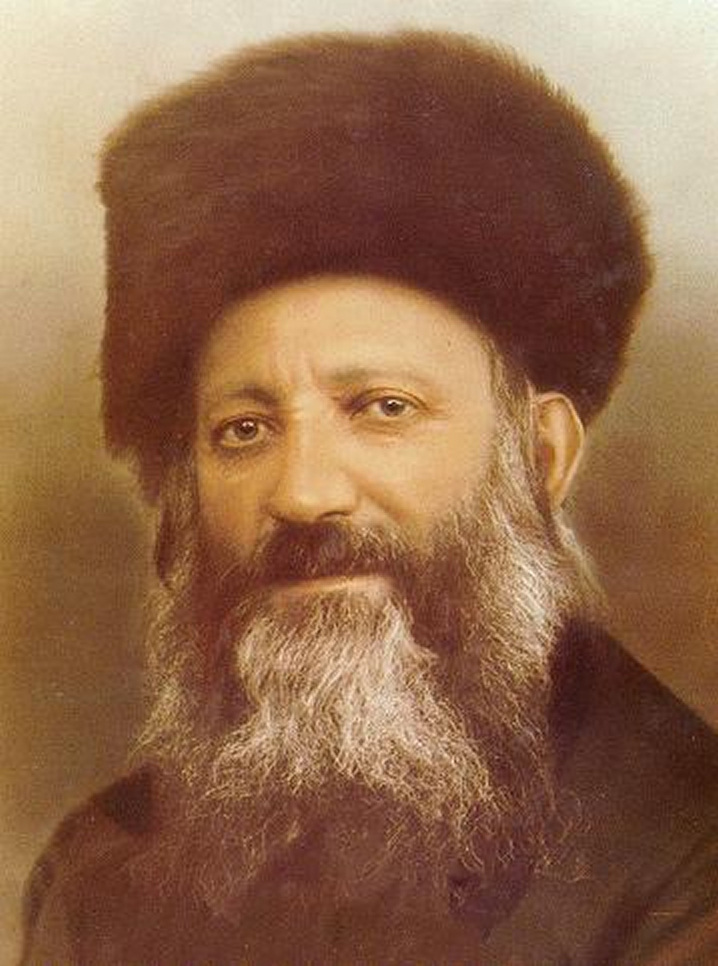
Real Zionism goes back to the Vilna Gaon and even older. Rav Kook was one of the "Real Zionists" for better or for worse. [As he largely helped define "The Jewish State"]
Even though Israel is secular -DAVKA, the purist sense of Zionism [which Bibi is one of the World's experts] will absolutely contain Haredi Judaism. The pretend Zionist will NEVER see this, and that is what makes Zionism so intriguing! Even though it is sheker, it is based on Emes [principles]. Much like a Star Wars discussion: its fake, but a real, tangible, and viable theology/ideology is there. Simply: it is not baseless fiction. On the flip side, imagine a real Torah state!
It is very interesting to see how Erev Katan and Erev Rav play off of this ping pong match of "Zionism." All players [on either side] are not necessarily evil [or good], but the overall plot is treif. We are in Galus afterall!
The irony is, Haredi Judaism works and balances perfectly within Zionism! [The opposition of Zionism works even better as a checks and balances system!] Overall, Zionism is like a bizzaro Torah Judaism, one that is fascinating to watch and experience in Israel. The real irony is that it is based on real Torah; so to be a Torah Scholar [hopefully of emes] in Israel gives insight into their equation on the side of merit that they [the "Zionists"] use as a propaganda machine. [i.e. they use Torah that they don't understand to validate their moves, and that will seem educated and knowledgeable; while to people that know (a lot of it is kabbalistic) their framework is transparent. To the onlooker, he is helpless, while the whole thing is a masquerade; again very similar to Star Trek and its relation to Physics! Any Star Trek follower will come across as a master of physics to the layman, similar is Zionism in relation to Torah - it has to be this way for its core to work.]
So is it a surprise that Bibi caters to Shas? NO! Is it clear who and what Livni is for her anti Haredi views? YES! She has the better logical point, but sorry Tzippi, that just isn't Zionism, and that is why you were never granted the power of the Premiership...but not for naught, as Zionism [Erev Rav and Katan] love and use their pawns - frequently. My only question, is when does Zionism collide with Emes?
YNetNews:
Is former Israeli Foreign Minister and leader of the centrist Kadima Party Tzipi Livni making her first steps back into politics? Livni, who is in the United States for a series of official meetings, gave an interview to CNN's Christiane Amanpour in which she slammed the Likud and Prime Minister Benjamin Netanyahu for "selling the state to the ultra-Orthodox."
In the interview , Livni attacked the Likud party for "surrendering to the haredim" and granting them a monopoly on the Jewishness of the State of Israel.
"Politically speaking, Israel is being sold to the ultra-Orthodox," Livni told Amanpour, adding that "the ultra-Orthodox represent a small portion of the Israeli society. They represent part of our history and tradition, but unfortunately they now have more power than they should."
“Netanyahu said himself, that for him politically, the ultra-Orthodox are his natural partners. And I believe that the raison d’etre of the State of Israel is to be the homeland of the Jewish People," she said adding that "for me being a Jewish state means something from a national perspective, not a religious one.”
Addressing the issue of the haredi military draft, Livni said that "each and every Israeli citizen needs to contribute to the society in which we live in. Unfortunately, because of political reasons, the State gives them (haredim) the monopoly, and this must be changed."
"In order to change reality, you need the willingness of the prime minister to make the change. Unfortunately, Netanyahu's coalition doesn’t want to make the change, and this," Livni said "will be part of Israel's future elections."
Asked whether Israel needed a formal separation between State and synagogue, Livni said that "I believe that what we need is a constitution and a clear definition of the Jewish state. The majority of Israelis understand and believe that Israel is the homeland of the Jewish people by its own nature, but it's also a state with equal rights to all its citizens. The idea of a Jewish state is from a national perspective and not a religious one."
Since Livni's resignation from the Knesset, a number of Knesset members from Kadima have considered the possibility of resigning from the party to form a new political movement headed by Livni.
Meanwhile, Haim Ramon, who was one of Kadima's founders and had left it following the election of Shaul Mofaz as chairman, revealed that he is currently in the midst of forming a new political party which will be positioned in the center of the political spectrum.
Ramon confirmed that the new party will be, among others, a new home for the former Kadima chairwoman.
Livni has officially distanced herself from Ramon, but continued to hold talks and meetings with Kadima MKs. In recent closed meetings, she stated that "her freedom is over," indicating that her return to Israeli politics is nearing.
One Kadima MK said a number of party members turned to Livni even before she resigned and asked that she form a new political movement. "She didn't say she'd do it, but there are those who hope she will," the lawmaker said. "The party is going to be cut in half in the next elections."
 |
| Real Zionism Lives! |
Tuesday, July 31, 2012
The Greek Mekubal Strikes Back

Science is convinced that they are the new Mekubalim.
The ancient battle rages on: Chachmas Yavan vs. Torah
Physics already is chasing God [Particles]; now they want "The Meaning of Life!"
Just Learn Torah Amigos!
You don't need to send Mars rovers spending insane amounts of dollars - you can/should invest that money in yeshivot!
I Promise if you put that much effort into Torah to "find the meaning of life" - you will!
The question is, why aren't the Jews even trying?!
The Vilna Gaon predicts in Kol HaTor that in Zman Geulah, physics and kabalah will unite. At least the two are starting to recognize each other, even if light years apart. [pun intended]
CSMonitor.com:
Saturn has its famous rings and Jupiter is the granddaddy of the solar system, but no planet has entranced earthlings quite like Mars.
Humans have launched 40 spacecraft to the Red Planet, lured by the prospect that life might once have existed in what is now dry rocks and sand. The latest machine to make the journey is NASA’s Mars Science Laboratory, a hulking, souped-up lab-on-wheels that will plunge toward the Martian surface next week.
But even as excitement builds, some wonder: Is Mars exploration a good investment?
It certainly doesn’t come cheap. It’s hard to calculate a total price tag, but over the 48 years that NASA has been launching missions to Mars, Americans have spent a significant sum. The Viking missions alone cost nearly $1 billion — in 1970s dollars. The twin rovers Spirit and Opportunity cost a total of about $1 billion to build and operate as well.
Curiosity, as the Mars Science Laboratory rover is known, is over budget at $2.5 billion.
Some in the federal government have suggested it’s time to roll back the spending. President Barack Obama’s fiscal plan for 2013 would cut NASA’s funds for Mars exploration from $587 million to $360 million.
Proponents insist Mars science is vital for the U.S. More visits to our next-door neighbor could answer lingering questions about Earth’s history, reinforce U.S. prestige and get more children interested in science.
It also could bring humanity closer to answering the ultimate question: Are we alone in the universe?
“It’s the search for the meaning of life,” said Alden Munson, a senior fellow at the Potomac Institute for Policy Studies, a science and technology think tank based in Arlington, Va.
America’s love affair with Mars can be traced to astronomer Percival Lowell, who turned his telescope to the Red Planet in the 1890s and thought he saw an intricate system of canals that must have been built by intelligent beings. He never found them, of course, but Martians became a science fiction mainstay.
Earthlings got their first up-close view of Mars’ rocky surface in 1965, when Mariner 4 flew by and photographed a surface that appeared as dead as the moon’s — lacking water or active geology, two prerequisites for life.
But later missions, from the Mariner 9 orbiter to Spirit and Opportunity, helped establish Mars as a useful comparative laboratory for studying climate and geophysics on Earth. They demonstrated that the planet was once warmer and wetter than it is now. Long ago, it may have been a hospitable cradle for life.
When planetary scientists assembled recently at the behest of the National Academies to set research priorities for the next decade, the search for conditions that would allow life to emerge on Mars topped the list.
“If there’s life or past life on Mars, it means the chances that life exists somewhere else are much higher,” said David Paige, who studies the moon and terrestrial planets at UCLA. If Mars is barren, “it might make Earth more unique than we thought.”
Some experts question the wisdom of focusing so intently on a single planet. Jupiter’s moon Europa, which is covered with an ice-encrusted ocean, could have the potential to harbor life; Saturn’s moon Titan, rich in organic chemistry, might as well.
“It’s like the person who loses their keys and only looks for them below the streetlight,” said David Jewitt, a planetary scientist at UCLA who studies comets.
But funds for planetary science are limited — and even those who favor a broader search admit that Mars remains the most practical site to explore.
A mission to Europa, for example, would take about six years to reach its destination. Curiosity’s trip to Mars takes about eight months.
Europa has other drawbacks too: For one, particles flung into space by Jupiter’s magnetic field would likely fry a spacecraft’s electronics in a matter of weeks, said Richard Greenberg, who studies the frozen moon at the University of Arizona.
“Personally, I love Europa,” he said. “But objectively, both it and Mars are great places to look for life.”
Regardless of whether life can be found beyond Earth, Mars exploration boosts U.S. prestige.
“A lot of the warmest feelings people have had around the world have had to do with the space program,” Munson said. “It’s hard to put a value on that.”
Space exploration is the ultimate status symbol. China and India have signaled their technological aspirations by establishing space programs. So have Iran, Pakistan, Venezuela, Israel, Mexico and dozens of other countries.
“I’m afraid if we step back, it will be decades before we get back to Mars,” said Rep. Adam B. Schiff, D-Calif., whose district includes NASA’s Jet Propulsion Laboratory in La Canada Flintridge, where Mars missions are based. “We have the expertise now. No other countries have been able to do this.”
NASA has outperformed other space agencies by a wide margin, completing 13 successful missions (against five failures) since 1964. The Russians have had particularly bad luck, with 15 failed missions and only four partial successes.
The amount of money Americans devote to Mars is tiny compared to annual expenditures on other NASA projects, said Munson, who noted that in 2011 alone, the agency spent more than $4 billion on the International Space Station and the fleet of space shuttles.
The James Webb Space Telescope, the successor to the Hubble Space Telescope that is designed to help scientists study the very early universe, is costing NASA $8.8 billion.
Even that price tag is dwarfed by the more than $600 billion the Defense Department will spend in 2012.
Jewitt put it like this: Americans spend more than $7 billion a year on potato chips.
“We’re talking about a small amount of money in the grand scheme of things,” Paige said.
Still, in the heat of an election season, some find it hard to justify Mars spending as long as the deficit remains high and the basic needs of many citizens aren’t met.
This time around, in the run-up to Curiosity’s high-profile landing, it’s hard to find people willing to criticize Mars science in public. But back in 2004, when President George W. Bush was pushing an ambitious plan that included manned missions to the Red Planet, Sen. Joe Lieberman of Connecticut (then a Democrat) said the billions of dollars NASA would require would be better spent “right here on Earth” on health care, education and domestic security.
Even those who’ve caught the Mars bug and are excited about Curiosity worry that with the new rover, NASA has “put all the eggs in one basket,” said Robert Zubrin, an aerospace engineer and founder of the MarsSociety, which advocates for manned missions to the planet.
When NASA’s Mars Climate Orbiter and Mars Polar Lander both failed in 1999, work was already under way on several other missions that turned out to be successful, Zubrin said. But there’s not much waiting in the wings this time around.
Plans to send a lander to scoop up Martian soil and return it to Earth, as well as to visit Europa, have been postponed to save money.
After Curiosity, NASA’s planetary scientists have only one major mission lined up: an orbiter called MAVEN, which will explore the Martian atmosphere and climate. It is scheduled for launch in 2013.
 |
| Its All Here! |


