


Showing posts with label Soul Mazal. Show all posts
Showing posts with label Soul Mazal. Show all posts
Thursday, May 21, 2015
Saturday, May 16, 2015

Wednesday, April 1, 2015
Are You Asking - "What Does My Name Mean?"

Are You Asking:
"What Does My Name Mean?!"
Find out this week and next, and get 50% OFF
What is Kabbalah Name Reading? What is in a Name? What does my name mean? What will a Kabbalah Name reading reveal?
Every person that has ever lived or will live is given their essential name. This name is their soul’s message for Mankind. Your “Mazal” is your message, and ultimately you alone tell your “prophetic” message. This is what a Kabbalah Name Reading can do for you!
Every person in Greater Israel [Jew and Noahide/Ger] must do his utmost to reach the level of the supreme numbers concealed within his name which can be computed in gematria. Each person is encouraged and empowered to achieve what is concealed in the gematria of his name. Otherwise, he may have to undergo a new gilgul [return to existence] to repair what he did not complete in this gilgul, for this is the nature of Man’s descent into this World.
 |
| Click Here For soulmazal.com Passover Promo!!! |

Monday, March 9, 2015

Sunday, November 23, 2014
Launching The All New "soulmazal.com!"

Are You interested To Learn More About Your Name? [Mazal!]
Check Out soulmazal.com
- Purpose
- Destiny
- Life Mission
- Making Sense
- Torah Spirituality
- Life's Questions
- ...and more

Friday, October 10, 2014

Monday, September 22, 2014

Wednesday, August 6, 2014
Original Wisdom Within Names

Click Here To Begin!
...It doesn't stop with the name!
Everything ever communicated, written, expressed, or thought of contains an infinite amount of Mazal - Ancient [Original] Wisdom [illuminated by Torah].
From the names we have, the practical list is immense!
- Business Names
- Location and address
- Pets
- Potential Matches
- Personal writing
- Mazal in Trends
- Torah in Life
- Any curiosity of the mind
- Life revelation and clarity
- Reveal purpose and [hidden] meaning
- Clear sense of self
- ...and endlessly more!
Please contact me at soulmazal@gmail.com for:
- Free consultation and examples of work
- FAQ
- And a more in-depth idea of what "understanding mazal" means [with purpose], why it is important, and how it it is unique beyond expectation.
"Some things in Life are you just good, and this is one of those pleasant surprises"
- The Soul Mazal Experience
Wednesday, July 23, 2014

Wednesday, June 18, 2014
Our Boys: The Message in Their Names

Eyal ben Iris Tshura / Ori
אייל בן איריס תשורה / אורי
(1) 320 Ayal ben Ori is gematria {Naar] נער - youth, also Yishai [320]
Roshei Teivot [initial letters] את אבא Et Aba: Father
also ''comes Av"''
Sofei Teivot [end letters] הנילס - the Nile [River]
Comes the Father, and youth
2. Gilad Michael ben Bat Galim / Ophir
גילעד מיכאל בן בת גלים / אופיר
(2) Roshei Teivot אמ בג בג - mother of ''Bag Bag''
Ben Bag-Bag was a rather mysterious Rabbi and a disciple of Rabbi Hillel of the early Tannaim age, appearing at the end of the Mishnah in Pirkei Avot. He is quoted in the Mishna, Turn it, and turn it, for everything is in it. Reflect on it and grow old and gray with it. Don't turn from it, for nothing is better than it. Another mysterious Rabbi of the same time, by the name of Ben He-He, is considered by some to be the same person. Speculation by Torah scholars leads many to believe these names to be labels to cover the true identities of these Rabbis because they were gerim who were persecuted by Roman authorities during the Roman occupation of the Land of Israel. Another Rabbinic tradition holds that Ben Bag Bag was the ger that Hillel symbolically taught the whole Torah while the ger stood on one foot. Source: Wikipedia
i.e. the message is that Gerim are being revealed.
**The Psalm 72 and Shem/Bavel references, along with present news events occurring simultaneously, are davka hints towards Noahide Gerim.
**The Psalm 72 and Shem/Bavel references, along with present news events occurring simultaneously, are davka hints towards Noahide Gerim.
Sofei Teivot - לדן תמר - the judgment of Tamar [The Midrash calls Tamar the Mother of Moshiach, for her lineage gives way to Malchus beis David, and she was awarded this through harsh din with Yehuda. Yehuda is synonymous with Hebron, the location of these events.]
גלעד מיכאל - Gilad Michoel: Gilad spelt without the yud = 208 = Yitzchak - as the Baal HaTurim says ''when Yishmael falls, Yitzchak i.e. the son of David, rises'' - as is known the many associations of Yitzchak with the Jewish people. The Arizal states [in reference to his own name] that the name Yitzchak is a siman l'geula [sign of Redemption]
3. Yaakov Naftali ben Rachel Devorah / Avraham
יעקב נפתלי בן רחל דבורה / אברהם
(3) The Roshei teivot: רב דין / בני דר Rav Din / B''nei dor - a lot of judgment on the children of the generation; also דביר נ [Dvir-Nun] - the Holy of Holies of Nun i.e. Nun Shaarie Bina - the 50 Gates of Understanding
בנדרי - - with nidrei [as in Kol Nidrei] [another hint in connection with Bag Bag, i.e. Gerim]
Sofei Teivot: לבניה which is a reference to Rachel's children
הלבני - ''HaLibni'' is the name of the family that came out in the Exodus [Bamidbar 3:21] - family of the Gershonites and they were called the Livnites because of the bricks they made in Egypt, and that name is a sign of the Redemption that was going to happen so G-d encapsulated it in their names, because the names of people show the generation what G-d is doing.
Roshei Teivot בירדן - in the Jordan [nearby Jordan Valley]
ב[מסבו] נרדי
Shir HaShirim 1:12 Shir HaShirim 1:12
''While the king sat at his table, my spikenard sent forth its fragrance.''
Nard is a fragrant herb but used here as the bad odour of idolatry
Gilad Michoel is the gematria Reyach [smell]
The beis is of the verse beis mem samech beis vav which is in reference to the table of the King.
Roshei teivot spells B''nei Adar; Sofei Teivot spells B''li Haman [without Haman]
Yaakov Naftali - 752 - gematria ''Emunah'' [loosely translated as ''faith'']
Gematria of Rachel Devorah is 555 which is Moshiach ben Yosef in Atbash
Devorah = 217 - gematria ''Ani Yosef''
Rachel = atbash gematria ''Kohen Tzedek'', which is Eliyahu
and the reason why we say Eliyahu in conjunction with לבניה is from the Midrash which says Eliyahu is from B''nei Rachel
The names of all three boys is gematria 920 which again is the Roshei teivot gematria of ''Kohen Tzedek'' and also Moshiach HaRishon which is obviously symbolic of Moshiach ben Yosef
The beginning and end letters of the family names:
the Roshei teivot of the family names is the gematria ''Shamayim'' and the end letters is the gematria ''Rachel of Heaven.
Roshei Teivot of boys first names [omitting Gilad] is אמני
גיל-עד
גיל means either the age or generation of, and the עד would be 74 - [5774]
- or the gladness of 74 or - to shake with fear from 74 - or we will rejoice in 74
Roshei teivot of first names אי then the word מגן = where is the shield/Magen Eretz Yisrael
The Roshei teivot of the three names: ארן דבי - Aron David ben Yishai - [the ark of David ben Yishai]
The initial and end letters of all their names spells B'din Gamliel - Rabbi Gamaliel’s overriding philosophy was: "Whoever has mercy on other people, Heaven will have mercy upon him; whoever does not have mercy on other people, Heaven will not have mercy upon him."
Beginning and end letters of the boys' names [without their parents' names]
דניאל גם ליב
Daniel also lion; or Daniel b'gimel : i.e. Daniel in [all] three
Three fathers names, gematria: בנס - with miracle
Psalm 72 tells the entire story!!
[take all previous hints into account]
The consistent theme of the names involved are literally all throughout this Psalm, in context, commentary, and vernacular.
Psalms Chapter 72
תְּהִלִּים
א לִשְׁלֹמֹה: אֱלֹהִים--מִשְׁפָּטֶיךָ, לְמֶלֶךְ תֵּן; וְצִדְקָתְךָ לְבֶן-מֶלֶךְ.
1 [A Psalm] of Solomon. Give the king Thy judgments, O God, and Thy righteousness unto the king's son;
ב יָדִין עַמְּךָ בְצֶדֶק; וַעֲנִיֶּיךָ בְמִשְׁפָּט. 2 That he may judge Thy people with righteousness, and Thy poor with justice.
ג יִשְׂאוּ הָרִים שָׁלוֹם לָעָם; וּגְבָעוֹת, בִּצְדָקָה.3
Let the mountains bear peace to the people, and the hills, through righteousness.
ד יִשְׁפֹּט, עֲנִיֵּי-עָם--יוֹשִׁיעַ, לִבְנֵי אֶבְיוֹן; וִידַכֵּא עוֹשֵׁק. 4 May he judge the poor of the people, and save the children of the needy, and crush the oppressor.
ה יִירָאוּךָ עִם-שָׁמֶשׁ; וְלִפְנֵי יָרֵחַ, דּוֹר דּוֹרִים
5 They shall fear Thee while the sun endureth, and so long as the moon, throughout all generations.
ו יֵרֵד, כְּמָטָר עַל-גֵּז; כִּרְבִיבִים, זַרְזִיף אָרֶץ. 6 May he come down like rain upon the mown grass, as showers that water the earth.
ז יִפְרַח-בְּיָמָיו צַדִּיק; וְרֹב שָׁלוֹם, עַד-בְּלִי יָרֵחַ.
7 In his days let the righteous flourish, and abundance of peace, till the moon be no more.
ח וְיֵרְדְּ, מִיָּם עַד-יָם; וּמִנָּהָר, עַד-אַפְסֵי-אָרֶץ. 8 May he have dominion also from sea to sea, and from the River unto the ends of the earth.
ט לְפָנָיו, יִכְרְעוּ צִיִּים; וְאֹיְבָיו, עָפָר יְלַחֵכוּ.
9 Let them that dwell in the wilderness bow before him; and his enemies lick the dust.
י מַלְכֵי תַרְשִׁישׁ וְאִיִּים, מִנְחָה יָשִׁיבוּ; מַלְכֵי שְׁבָא וּסְבָא, אֶשְׁכָּר יַקְרִיבוּ. 10 The kings of Tarshish and of the isles shall render tribute; {N} the kings of Sheba and Seba shall offer gifts.
יא וְיִשְׁתַּחֲווּ-לוֹ כָל-מְלָכִים; כָּל-גּוֹיִם יַעַבְדוּהוּ. 11 Yea, all kings shall prostrate themselves before him; all nations shall serve him.
יב כִּי-יַצִּיל, אֶבְיוֹן מְשַׁוֵּעַ; וְעָנִי, וְאֵין-עֹזֵר לוֹ.
12 For he will deliver the needy when he crieth; the poor also, and him that hath no helper.
יג יָחֹס, עַל-דַּל וְאֶבְיוֹן; וְנַפְשׁוֹת אֶבְיוֹנִים יוֹשִׁיעַ. 13 He will have pity on the poor and needy, and the souls of the needy he will save.
יד מִתּוֹךְ וּמֵחָמָס, יִגְאַל נַפְשָׁם; וְיֵיקַר דָּמָם בְּעֵינָיו. 14 He will redeem their soul from oppression and violence, and precious will their blood be in his sight;
טו וִיחִי-- וְיִתֶּן-לוֹ, מִזְּהַב שְׁבָא: וְיִתְפַּלֵּל בַּעֲדוֹ תָמִיד; כָּל-הַיּוֹם, יְבָרְכֶנְהוּ. 15 That they may live, and that he may give them of the gold of Sheba, {N} that they may pray for him continually, yea, bless him all the day.
טז יְהִי פִסַּת-בַּר, בָּאָרֶץ-- בְּרֹאשׁ הָרִים: יִרְעַשׁ כַּלְּבָנוֹן פִּרְיוֹ; וְיָצִיצוּ מֵעִיר, כְּעֵשֶׂב הָאָרֶץ. 16 May he be as a rich cornfield in the land upon the top of the mountains; {N} may his fruit rustle like Lebanon; and may they blossom out of the city like grass of the earth.
יז יְהִי שְׁמוֹ, לְעוֹלָם-- לִפְנֵי-שֶׁמֶשׁ, ינין (יִנּוֹן) שְׁמוֹ:
וְיִתְבָּרְכוּ בוֹ
כָּל-גּוֹיִם יְאַשְּׁרוּהוּ. 17 May his name endure for ever; may his name be continued as long as the sun; {N} may men also bless themselves by him; may all nations call him happy.
יח בָּרוּךְ, יְהוָה אֱלֹהִים--אֱלֹהֵי יִשְׂרָאֵל: עֹשֵׂה נִפְלָאוֹת לְבַדּוֹ. 18 Blessed be the LORD God, the God of Israel, who only doeth wondrous things;
יט וּבָרוּךְ, שֵׁם כְּבוֹדוֹ-- לְעוֹלָם: וְיִמָּלֵא כְבוֹדוֹ, אֶת-כֹּל הָאָרֶץ-- אָמֵן וְאָמֵן.
19 And blessed be His glorious name for ever; {N} and let the whole earth be filled with His glory. Amen, and Amen.
כ כָּלּוּ תְפִלּוֹת-- דָּוִד, בֶּן-יִשָׁי. 20 The prayers of David the son of Jesse are ended. {P} 1.
[take all previous hints into account]
The consistent theme of the names involved are literally all throughout this Psalm, in context, commentary, and vernacular.
Psalms Chapter 72
תְּהִלִּים
א לִשְׁלֹמֹה: אֱלֹהִים--מִשְׁפָּטֶיךָ, לְמֶלֶךְ תֵּן; וְצִדְקָתְךָ לְבֶן-מֶלֶךְ.
1 [A Psalm] of Solomon. Give the king Thy judgments, O God, and Thy righteousness unto the king's son;
ב יָדִין עַמְּךָ בְצֶדֶק; וַעֲנִיֶּיךָ בְמִשְׁפָּט. 2 That he may judge Thy people with righteousness, and Thy poor with justice.
ג יִשְׂאוּ הָרִים שָׁלוֹם לָעָם; וּגְבָעוֹת, בִּצְדָקָה.3
Let the mountains bear peace to the people, and the hills, through righteousness.
ד יִשְׁפֹּט, עֲנִיֵּי-עָם--יוֹשִׁיעַ, לִבְנֵי אֶבְיוֹן; וִידַכֵּא עוֹשֵׁק. 4 May he judge the poor of the people, and save the children of the needy, and crush the oppressor.
ה יִירָאוּךָ עִם-שָׁמֶשׁ; וְלִפְנֵי יָרֵחַ, דּוֹר דּוֹרִים
5 They shall fear Thee while the sun endureth, and so long as the moon, throughout all generations.
ו יֵרֵד, כְּמָטָר עַל-גֵּז; כִּרְבִיבִים, זַרְזִיף אָרֶץ. 6 May he come down like rain upon the mown grass, as showers that water the earth.
ז יִפְרַח-בְּיָמָיו צַדִּיק; וְרֹב שָׁלוֹם, עַד-בְּלִי יָרֵחַ.
7 In his days let the righteous flourish, and abundance of peace, till the moon be no more.
ח וְיֵרְדְּ, מִיָּם עַד-יָם; וּמִנָּהָר, עַד-אַפְסֵי-אָרֶץ. 8 May he have dominion also from sea to sea, and from the River unto the ends of the earth.
ט לְפָנָיו, יִכְרְעוּ צִיִּים; וְאֹיְבָיו, עָפָר יְלַחֵכוּ.
9 Let them that dwell in the wilderness bow before him; and his enemies lick the dust.
י מַלְכֵי תַרְשִׁישׁ וְאִיִּים, מִנְחָה יָשִׁיבוּ; מַלְכֵי שְׁבָא וּסְבָא, אֶשְׁכָּר יַקְרִיבוּ. 10 The kings of Tarshish and of the isles shall render tribute; {N} the kings of Sheba and Seba shall offer gifts.
יא וְיִשְׁתַּחֲווּ-לוֹ כָל-מְלָכִים; כָּל-גּוֹיִם יַעַבְדוּהוּ. 11 Yea, all kings shall prostrate themselves before him; all nations shall serve him.
יב כִּי-יַצִּיל, אֶבְיוֹן מְשַׁוֵּעַ; וְעָנִי, וְאֵין-עֹזֵר לוֹ.
12 For he will deliver the needy when he crieth; the poor also, and him that hath no helper.
יג יָחֹס, עַל-דַּל וְאֶבְיוֹן; וְנַפְשׁוֹת אֶבְיוֹנִים יוֹשִׁיעַ. 13 He will have pity on the poor and needy, and the souls of the needy he will save.
יד מִתּוֹךְ וּמֵחָמָס, יִגְאַל נַפְשָׁם; וְיֵיקַר דָּמָם בְּעֵינָיו. 14 He will redeem their soul from oppression and violence, and precious will their blood be in his sight;
טו וִיחִי-- וְיִתֶּן-לוֹ, מִזְּהַב שְׁבָא: וְיִתְפַּלֵּל בַּעֲדוֹ תָמִיד; כָּל-הַיּוֹם, יְבָרְכֶנְהוּ. 15 That they may live, and that he may give them of the gold of Sheba, {N} that they may pray for him continually, yea, bless him all the day.
טז יְהִי פִסַּת-בַּר, בָּאָרֶץ-- בְּרֹאשׁ הָרִים: יִרְעַשׁ כַּלְּבָנוֹן פִּרְיוֹ; וְיָצִיצוּ מֵעִיר, כְּעֵשֶׂב הָאָרֶץ. 16 May he be as a rich cornfield in the land upon the top of the mountains; {N} may his fruit rustle like Lebanon; and may they blossom out of the city like grass of the earth.
יז יְהִי שְׁמוֹ, לְעוֹלָם-- לִפְנֵי-שֶׁמֶשׁ, ינין (יִנּוֹן) שְׁמוֹ:
וְיִתְבָּרְכוּ בוֹ
כָּל-גּוֹיִם יְאַשְּׁרוּהוּ. 17 May his name endure for ever; may his name be continued as long as the sun; {N} may men also bless themselves by him; may all nations call him happy.
יח בָּרוּךְ, יְהוָה אֱלֹהִים--אֱלֹהֵי יִשְׂרָאֵל: עֹשֵׂה נִפְלָאוֹת לְבַדּוֹ. 18 Blessed be the LORD God, the God of Israel, who only doeth wondrous things;
יט וּבָרוּךְ, שֵׁם כְּבוֹדוֹ-- לְעוֹלָם: וְיִמָּלֵא כְבוֹדוֹ, אֶת-כֹּל הָאָרֶץ-- אָמֵן וְאָמֵן.
19 And blessed be His glorious name for ever; {N} and let the whole earth be filled with His glory. Amen, and Amen.
כ כָּלּוּ תְפִלּוֹת-- דָּוִד, בֶּן-יִשָׁי. 20 The prayers of David the son of Jesse are ended. {P} 1.
***Psalm 72 is King David's last psalm, and written to King Solomon. The objective is to acknowledge the Nations [Noahides] from Zion, and judge / operate from righteousness. One pillar of the psalm, is that nations and isles will come upon Jerusalem with Gold gifts for the Temple. Verses 14-20 are especially apropos to the current situation and a possible unfolding of events. The rest of the Psalm is in alignment with the Islands of today.
72:4 - Note לִבְנֵי : Libni
72:7 - Note the family name יִפְרַח [Eyal Yifrach]
72:10 ''The kings of Tarshish and of the isles shall render tribute; the kings of Sheba and Seba shall offer gifts.''
The Metsudas David explains that the Kings of Shvah will bring gifts called TShura - Tshura means ''flowering [Iris/Yifrach]with gifts of gold''.
As we write this, Rabbi Tovia Singer is in the midst of a pilgrimage to Papua New Guinea and the Papuans want to give their gold to Jerusalem for the Third Temple. The whole episode of the kidnapping happens when those islands in the Prophecy are in the news. Tovia Singer's mission is unprecedented... with his presence in the islands at the very time the boys are kidnapped, fulfilling
72:1 [Rabbi Singer was honored similar to a king (in the name of Peace/שלמה - meaning peace)] "To Shlomo, give thy judgments, o' God."
משפטיך = "from" - Shin to Beit, Peh to Vav in atbash, keep the Tet and Yud, while the Kaf Sofit in Atbach becomes Heh = "From Toviah..." [there is a similar hint in this way with the last word of verse 3 and first word of verse 4.
Psalm 72.
72:1 [Rabbi Singer was honored similar to a king (in the name of Peace/שלמה - meaning peace)] "To Shlomo, give thy judgments, o' God."
משפטיך = "from" - Shin to Beit, Peh to Vav in atbash, keep the Tet and Yud, while the Kaf Sofit in Atbach becomes Heh = "From Toviah..." [there is a similar hint in this way with the last word of verse 3 and first word of verse 4.
Psalm 72.
72:13 עַל]-דַּל] - Sofei Teivot Gilad Michael [דל is a common theme in the Psalm, of those in need of mercy]
72:14 מִתּוֹךְ וּמֵחָמָס יִגְאַל נַפְשָׁם - HAMAS
the first and last letters of the boys' names spell יגאל with a left over [מ [מתוך and [נ [נפשם...leaving the word "and from Hamas" revealed alone
Can be understood as ''in the midst of Hamas.... He will redeem their souls''
"from fraud and Hamas he will redeem their souls and precious will be their blood in his eyes
[The leftover ב and ד of the names compose the initial letters of the words for "their blood" and "in his eyes"]
the letters involved are: ב ד א ל י ג מ נ and then "Hamas" easily stands out [יגאל -מ -נ ב-ד]from יעקב נפתלי גילעד מיכאל אייל
"from fraud and Hamas he will redeem their souls and precious will be their blood in his eyes
[The leftover ב and ד of the names compose the initial letters of the words for "their blood" and "in his eyes"]
the letters involved are: ב ד א ל י ג מ נ and then "Hamas" easily stands out [יגאל -מ -נ ב-ד]from יעקב נפתלי גילעד מיכאל אייל
72:17 - ינין (יִנּוֹן) שְׁמוֹ: - can be understood as ''His name [Moshiach] will be Nun'''[see Nun Shaarai Bina above]
72:7 - ריח/ירח another reference to the Nerd spice and 218 reference above.
72:7 - ריח/ירח another reference to the Nerd spice and 218 reference above.
72:20 [David ben] Yishai - 320, same as Naar above; David is called a Naar.
Yaakov Naftali initial letters = נר - ד'ב'י - the soul/light of David ben Yishai
Yaakov Naftali initial letters = נר - ד'ב'י - the soul/light of David ben Yishai
Now let's look at Noah 10:28-29: Shvah, Ofir and Havila bringing gold to Jerusalem - in the order of Shem's sons : our attention is drawn to Shem [Gerim] and gifts of gold, as mentioned above [Tshura].
All 3 names relate to gold in the Torah [Shvah - our Psalm, Ofir, Navi, and Havila, Bereishis]
All 3 names relate to gold in the Torah [Shvah - our Psalm, Ofir, Navi, and Havila, Bereishis]
These are the families of the sons of Noah according to their generations, in their nations, and from these, the nations were separated on the earth after the Flood. Noah 10:32
this is immediately followed by the story of the Tower of Babel... the making of the bricks נִלְבְּנָה לְבֵנִים and the name Libni Noah 11:3
notice a reference to Migdal [Bavel] מגדל - ג -ד - מ - ל - end/beginning letters to Gilad Michael
notice a reference to Migdal [Bavel] מגדל - ג -ד - מ - ל - end/beginning letters to Gilad Michael
11:4 Note the current Iraqi uprising reminding us of the Tower of Babel, both in exact location of the Tower of Bavel, and the general theme of world events, Nimrod comparisons, etc.. *****
The eitzah is in their names and in the Psalm...
The eitzah is in their names and in the Psalm...
Monday, June 9, 2014
Ah Yes Yes Yes...The Soul Mazal Indeed!

- Soul Mazal
- Names, Purpose, Mission
- Noahides and Names
- Torah and Gematria
- Authentic Spirituality
- etc.
Friday, May 23, 2014
Mazal Tov!

Chabad.org:
Question:
I always thought Mazel Tov meant “congratulations.” I recently heard that it actually means “good luck.” But I thought Jews don’t believe in luck . . . ?
Answer:
Your confusion is understandable. The Talmud—the ancient encyclopedia of Jewish wisdom—seems to contradict itself on the issue. In one place it states, “On your birthday, your mazel is strong.” Elsewhere the Talmud reports, “The Jewish people are not subject to mazel”!
The word mazel literally means “a drip from above.” Mazel can have different connotations depending on its context, but they are all connected to this basic definition—something trickling down from above.
The signs of the zodiac are called mazalot. Jewish tradition sees the constellations on high as directing the destiny of individuals and nations down below. Thus mazel is the influence dripping down from the stars. (Over the years, bad or good mazel came to mean luck more than destiny.) When the Talmud says that we are not subject to mazel, it means that we are not limited to our destiny; rather our own actions determine our fate.
There is another meaning of the word mazel that is more relevant to the phrase Mazel Tov. Mazel is the term used in Jewish mysticism to describe the root of the soul. The mystics say that only a ray of our soul actually inhabits our body. The main part of the soul, our mazel, remains above, shining down on us from a distance.
Have you ever experienced a sense of spontaneous intuition, where out of the blue you suddenly feel at peace with yourself and the universe? Or a sudden flash of inspiration that makes you see life in a new light? Occasionally we may receive an extra flux of energy from our soul above. It can happen at any time, but is most common at a time of celebration—a birth, birthday, brit, bar/bat mitzvah or wedding. It is especially at these times of joy that we are able to see beyond the mundane and the petty and to sense the deeper truths of life.
When we tell someone Mazel Tov, we are giving them a blessing: May this drip of inspiration from your soul above not dissipate, but rather have a positive and lasting effect, that from this event onwards you should live your life with higher consciousness. You should be aware of the blessings in your life and be ready to receive more and more.
In other words: Good Mazel!
Soul Mazal is getting in touch with that higher element of soul that comes into our perceived reality through Name [revelation] and Torah [mystical] Study.
Monday, May 19, 2014
Soul De Le Mazalo

Hat Tip Shirat Devorah:
The Talmud (Berachot 7b) teaches that a Hebrew name has an influence on its bearer. Therefore, it is extremely important to name children after individuals with positive character traits who led fortunate lives and helped bring goodness to the world.
The Arizal writes that the nature and behavior of a person, whether good or bad, can be discovered by analyzing his or her name. For example, a child named Yehudah could possibly be destined for leadership, for Yehudah, the fourth son of Jacob, symbolized monarchy and most Jewish kings descended from the tribe of Yehudah.
It is said that parents are actually blessed with prophesy when naming their newborn babies.
According to the Arizal, even the numerical value of the Hebrew letters in one's name can be indicative of an individual's character. For example the gematria of the name Elisheva is equivalent to the numerical value of the Hebrew words yemei simcha, meaning "days of happiness," perhaps portending a joyous life for a baby girl named Elisheva.
It is precisely because the fortunes and misfortunes of mankind are concealed in the secrets of the letters, vowels and meanings of Hebrew names that a seriously ill person is given an additional name like Chaim, meaning "life," or Rafael, meaning "God heals," in order to influence his destiny. We hope and pray that the new name will herald a new mazel, or fortune, for the stricken individual.
Rabbi Elimelech of Lyzhansk, writes in his classic work on Torah "Noam Elimelech" (Bamidbar) that there is a profound connection between the soul of an infant and the soul of the person for whom he or she is named.
When a child is named after the deceased, the latter's soul is elevated to a higher realm in heaven and a spiritual affinity is created between the soul of the departed and the soul of the newborn child. That deep spiritual bond between these two souls can have a profound impact on the child.
Zocher HaBris 24:4, who also quotes Noam Elimelech on Bamidbar: “If they give him the name of a tzaddik who has already lived in this world, this will cause him also to become a tzaddik, because it has aroused the soul of the departed tzaddik in the Supernal World.
If anyone reading along with interest in "Name Torah" finds interesting and valuable [further] sources and insights - that will shed light on this massive essential Torah tradition - please send them to my email [soulmazal@gmail.com] and I will blog it accordingly. It is very imperative to publicize the Torah concerning names, at least because of its severity, lack of knowledge, and misinformation about it. It goes without saying, that Names are just as essential to Noahides [Gerim] as Jews and equally prophetic. If the whole World knew and/or had their names revealed to them, our purpose, knowledge of self, and inclination of "what should I do" questioning would be revealed through any study or meditation of the name. With that said, a large part of Torah can be dedicated solely to the study of names [and one's name]. This is holy work, and it is part of my personal duty to make this knowledge available - as much as my Ger Torah work, and I encourage all to investigate further , even on a simple and basic level.
Monday, May 12, 2014
Your New Name - Concepts In Judaism

Thanks to Rabbi Lazer Brody for this great article showing the rich Jewish Tradition of the value of having a Name!
I might add that as every name ever given is prophecy [thus the Rabbi warns against frivolous choices in choosing a name] and contains our Torah [non-astrological] Mazal; Mazal is the Torah defined relationship that we have with Hashem as He calls our name. Thus like any piece of Torah, a Name is the most natural Word(s) of Torah that we possess, and we can gleam infinite wisdom from the Tree of Life just by delving into our names!
Unlike astrology and divination, the soul has a name, and that name is part of the Torah itself; to learn the Name is most distinct path in understanding ourselves as we exist in relation to God. One need only to look into the Torah to see how important it is to have a Name and that its investigation is fundamental in Judaism and tradition straight from the Torah. The Zohar and kabbalah has endless examples of showing how a name entails our mission, not as to show the future, but to connect to our mazal/energy that we constantly live with, and so that when the moment comes to act for God, we have our name to rely upon.
**For the record I do not endorse outright baseless name change; what I do endeavor to help with is aiding and influencing an additional subsidiary Hebrew Name that serves to help with spiritual insight to a person's life and meaning/purpose. As with any Torah, Hebrew has the divine quality to shine a more precise image of our soul; yet should one want to investigate their natural born name, there is no need to change it out of haste or spite, rather it too yields great wisdom under the disciplines of Torah study, that apply to all learning of names in this way in Torah tradition.
Breslov.co.il:
One of the most frequent questions people ask me is they're allowed to change their names. Hundreds of times, I hear complaints like, "Is it my fault that my grandmother's name was Yenta Dvosha? Why did my parents call me that? They didn't consider what I would have to go through…"
Nimrod was born on a kibbutz in the Galilee. During the Second Lebanon War in 2006, a Hizbolla bullet pierced a hole in his helmet but merely cut his scalp. He needed stitches, but he couldn't ignore the miracle, for less than a centimeter separated between life and death. Nimrod became a baal teshuva, a newly observant Jew, but the name had to go, for the Nimrod in the Torah was the first person in history to rebel against Hashem.
Many people aren't happy with the name that their parents give them, for any number of reasons. The bottom line is that it's their life, and they want to do what makes them happy. Mom might have loved the name of Myrtle and maybe Dad thought that Isidore was a distinguished name, but why should their kids be stuck with a name that makes them miserable? Shouldn't they be allowed the free choice of changing their own name? What are the ramifications of a name change?
The Torah shows us that a change of name invokes a change of good fortune. Abram and Sari were not only childless, but totally infertile. Hashem changed their names to Abraham and Sarah, and they became parents with millions of offspring – we are the proof! Since the name of a person reflects the nature of his or her soul, one who changes his/her name gets a new soul. Usually, his or her life takes a turn for the better.
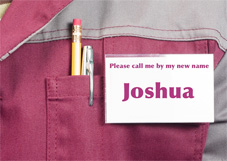 Nevertheless, you shouldn't decide on a new name on your own; seek the advice of a qualified rabbi and genuine spiritual guide who understands the ramifications of a name change and who knows you as well. Such an individual can help you choose the right name.
A person's name, inasmuch as it's the "label" of his or her soul, tells much about that person's character traits. Here are things to consider when changing your name:
1. Choose the name of a righteous person, preferably from the Torah and preferably a Hebrew name, for Hebrew names have a special holiness, and holiness is a vessel for Divine abundance.
2. Don't choose the name of an angel, unless it is a commonly used name such as Michael, Gabriel or Raphael.
3. Stay away from foreign names (see #5, below).
4. Don't take the name of a person who died young or was killed tragically.
5. Don't take a name that is strange. "Trendy" names like "April" or "Tiger" may be fun for a cocktail party, but they're devastating for a soul. They don't stem from holiness so they don't invoke blessings.
6. Pick a name that you like, that you're comfortable with and that best seems to describe you.
When a person doesn't feel good about his or her name, he or she has every right to change it. Changing a name does have its advantages. Our sages say that a name change rips up an evil decree against a person. The Zohar says that by virtue of a name change, one's sins are forgiven. Rebbe Nachman says that a name change can elevate a person. And, the Rambam tells us that a name change helps a person break away from the past and forget it.
In any event, a name change is serious business – don't take it lightly. You can't change your name like your change your clothes, for multiple name changes can trigger severe identity crises. Again, consult a qualified rabbi and genuine spiritual guide whom you trust and who knows you.
Parents have no right to emotionally blackmail their children who want to change their names. Let the child live his life as he sees fit. By the same token, parents cannot expect their children to have the same taste or values as they do, especially when the parent is secular and the child has decided to live an observant lifestyle. The name that suited him on the football field is not the name he wants as a Torah student. "Candy" or "Ginger" was fine for a cheerleader, but the young lady who is now learning Torah in Jerusalem and contemplating marriage would much rather be Rivka or Rachel.
Some months ago, I purchased a new cellular phone. The store manager, a courteous and personable young lady, asked me if I were a rabbi. When I answered in the affirmative, she requested a blessing to get married. She told me that she was 28, a university graduate with a good job and good salary, athletic and considered attractive. She had plenty of dates but no marriage proposals and not even one decent candidate to spend the rest of her life with. "What's wrong with me, Rabbi? What's holding up the train?"
I asked the young woman what her name was. She answered, "Lilit". I gulped. She asked what was wrong. I told her that her name was the wife of the Samech-Mem, better known as the Satan. No wonder she wasn't married. Her parents. "modern Israelis", liked the sound of they name they give her, but they never asked its significance. That following Shabbat, I arranged a formal name change for her. She was blessed by her new name, "Leah the daughter of Menachem", in front of an open Torah scroll. Lilit became Leah, and Leah became engaged to a wonderful young man less than two months later.
The right name is conducive for inner peace and freedom from emotional bondage. Be careful about picking your new name and don't be impulsive. It's so important to consult your rabbi and spiritual guide. Most of all, be true to yourself. May you have nothing but blessings always, amen!
* * *
We invite you to visit Rabbi Lazer Brody’s award-winning daily web journal Lazer Beams.

Tuesday, January 7, 2014
Hello Old Friend

Parashas Bo
The Chock and The Mitzvah: Join The Ger
Rabbi David Pesach Katz
Oh
Parashas Bo, oh how I love you…In 2000, I met my first Noahide friend online,
and was told of four things by this Ruby Wings as she called herself: 1) You
will make Aliyah 2) Shem is Malki Tzedek 3) Shir Hashirim is amazing by king
Solomon 4) Parashas Bo is her favorite Parasha. Suffice it to say, that young
kid did make Aliyah [despite not having a clue about its ramifications and
implications back in 2000], my life work began with the Torah of Shem [to
Noahides], before that [and still to this to some extent] my life work was/is
Shir Hashirim, which as I ended my commentary it concluded as an example as the
Love between the Jew and The Ger, and then Parashas Bo…which hit me like a ton
of bricks – only this week. After nearly fifteen years of waiting for the
missing piece to emerge in Bo, it has, and yes, it was through Gerim. I found
nothing new to what this on-going project has become, only what I did find, was
that all of "this" was sitting nicely at 12:43 – topics of the Ger
and his Bris.
I came to this verse – the missing piece, appropriately by
today's Gerim, and as shocked as I was to realize that that I made it home so
to speak [the entire Ger saga can literally be identified from this verse
through its proper extensions, in association with the Midrash Rabba and the
life story of Ketia Bar Shalom Avodah Zara 10b], even more shocking was the
revelation that seemed tailor made for me in this verse – a [my] true "Soul
Mazal" experience finally [ironically] boomeranged back. With the fourth
piece now eternally secure, all I can say is, "Oh Parashas Bo, oh how I
love you…In 2000, I met my first Noahide friend online, and was…"
***This
article is based on the most impactful revelations that come from 12:43 in Bo;
the possibilities are endless, as in my opinion, this verse is the Gan Eden of
Ger Torah. There is no wrong, only not enough pen and ink to cover all ground.
Therefore the gist of the article will cover only a taste of the World to Come
on this and should be seen as an extensive work. For that, [the extensive work]
– well, we are doing that too, it is called Soul Mazal – the Universal Torah
through the Ger, and reaching your name/soul potential in the process. For me,
it began and ends at 12:43, concerning the "Chukas of the Pesach" –
the Bris, The Ger, and The Passover together in Jerusalem. Enjoy.
"Chock"
– A law [i.e. The Torah of a topic, relative to Law] that is beyond the simple
rational mind. The Passover [Offering] is called a Chock, and now we can begin
to discover why.
Simply
put, the Passover [Offering; notice the difference between the Passover vs.
"The Holiday of Passover" for further connotation. The holiday of
Passover is termed as such after the Offering. The biblical Holiday of Passover
is called the Festival of Matzah's.] is an obligation incumbent upon every
member of the House of Israel. In what seems like forever, that was a blanket
perception of Kosher Jews, to the exclusion of any type of gentile, and the
core issue of its linkage to the Brit [circumcision] [which is the main crux of
the "Chock"] has been considered irrelevant in the grand scope of
things, while seen as trivial fact. Only now, when we examine 12:43, with
intent and focus of isolation of this "Chock" along with our Ger
radar turned on in these matters in the Torah that call out our friends by
name [strong hint], we can see with crystal clear clarity that the
big picture has been largely ignored, and for no good reason. Simply put, those
who are without circumcision, the Passover is not for you, and the circumcised Ger
[among other inclusions as per the topic; likewise for the inverse case], well,
Baruch Habah [welcome].
The
Passover is a Chock [phonetically: Hhoakhe] and being as such it requires
investigation to fathom the depths that a proper Chock is invested in, for by
nature, it is not obvious or even rational. The basic premise of the Chock is
to relate it to the Bris, and to unite the blood that comes from the Passover
and the Bris [circumcision, lit. the covenant].
In
the Exodus from Egypt Hashem wiped out the first born in Egypt in the 10th
and most powerful plague. Israel was spared this demise through the adherence
of placing the Blood of the Passover Offering on their doorpost. Passover
literally means to "pass over" [from the angel of death], thus Israel was
saved, and the 10th plague is represented with blood, and stands as
perhaps [at least one of] Hashem's greatest miracle(s) – for even in the realm
of rational thinking, this miracle stands with all of its appropriate Glory [to
God]. Thus in the end of things, Passover is represented by blood, and this
remains an integral part of the Chock for all times, even in the progressive
sense.
This
act of God stands without peer for many reasons; yet the biggest point of
revelation is to be found in the fact that Israel just killed and ate the
Egyptian Gods. Generally this would be the kiss of death to express a chutzpah
such as this, yet Israel would go through this danger – AND LIVE. Thus we see
the profound nature within this Chock [by definition this isn't rational and
easy to understand]; such is the progressive precedent in all areas of this
"Passover Mitzvah" which comes under the microscope eternally with the
Gerim of each new generation who wish to permanently leave Egypt and her
idolatry.
The
Bris Mila [circumcision act/ritual – look to Tzippora, the wife of Moses and
her brave actions in the sanctity of a COMPLETE Bris Mila ceremony; she
performed the "Mila" and the "metzitzah", as per her name
Tzippora which means "rock" and "mouth" thus implies the
severing and the sterilization – completing of the mitzvah such that the baby
will live through its danger.] is another act of God [and a relative to type of
Chutzpah; again, see Tzippora and her declaration upon completing the act in
reference to the "blood that reached to 'his' feet"] that involves
blood in the realm of the Chock, and all the while going against the rational
point of view. The baby is seen to live through the danger and exposure of an
infant's own blood shedding. The circumcision, as we saw with the danger
surrounding Moses and his lack of haste in the performance of the Bris, has the
same function as the Passover, in that they both push off the Angel of Death in
the moment of Chutzpah; an open act of God even amidst the moment of danger.
Combine
the Bris with Passover, and practically everything else that is represented in
these concepts, along with the Ger's desire to be involved with everything Passover-ish
[The uncircumcised Ger as well shall find his role here along with his soul
root] the famous Chock begins to shed light – for this is the foundation of the
Torah of The Ger, and more importantly the root of the Mitzvah of vitality
between Jew and Ger. This mitzvah of vitality is set around the Tzeddaka of
non-kosher meat that is delivered to the Ger; once in the context of Passover,
this enigmatic ritual suddenly takes great shape in the context of the annual
Jerusalem bash that ironically is centered on meat! When the peripheral of the
Jerusalem experience is considered, one immediately realizes that the Ger is
100% part of this Mitzvah, and the experience thrives on his presence; with a
bit of context and thinking that makes sense, the archaic command of delivering
meat is transformed to a magical experience – annually within the walls of
Jerusalem. It does not take much to consider from this point to realize the
great importance and soft secrets of the need for Temple Offerings; in fact, it
is quite logical and to imagine the bonding between Gerim and Jews vis a vis
the Temple in this capacity.
Consider
the millions of Jews who ascend to Jerusalem annually to eat the Passover
Offering. To think of a "strangers keep out mentality" is absolutely
antithetical to the depth of the holiday on every possible angle, even the
practical and rational! For every kosher slaughter, one must imagine the amount
of forbidden animals that must arise, purely from a statistical level. It
should be obvious that at least 10% of all Passover Offerings are not
permissible to consume due to the strict laws of Kashrut [Kosher laws]; these
laws are strict and not without reason and compassion from God. If one were to
calculate among the millions of Jews, their Offerings in numbers, and thus the
amount of blemished animals – the Gerim who are not circumcised now are able to
take part of the gifts [of meat] to perform one of the Torah's most sacred mitzvoth
between the Jews and Gerim of "Love the Ger." This hasn't even
touched upon all of those Gerim who wish to be circumcised and by law are
included in the Mitzvah by the other view of the Chock! Most would never
imagine a "gentile" eating the Passover Offering, but the Torah comes
to reveal that not only do the circumcised Gerim eat of it, but that they are
not in fact considered gentiles upon going under the knife! With these
ingredients under Divine Command, Passover just erupted into the time of our lives
when we ponder the Joy [Hedva] through the undertaking of the diversity with a circumcised
heart as Hashem has willed within the Torah.
Every
Jew loves Passover, even if for reasons unbeknownst to himself; the even bigger
revelation is that among rituals like Shabbos and Torah study, the Gerim are
historically [and presently] equally invigorated to partake in the [current]
Passover assemblies. As "why" may not be the issue at hand, for the
Torah proves that this is spiritual DNA of every Jew and Ger, and to be in the
same capacity [in the Temple and Jerusalem] really should no longer be anything
of a surprise; quite the opposite, it should be obvious from the verses and
Torah documented history themselves! For further insight to the Ger [non
convert] and his Bris along with the implications as a precedent in history,
visit the story of Ketia Bar Shalom! [Avodah Zara 10b; the audio shiur will
cover this story for context]
Baruch
Hashem for Gerim; in the most blatant sense, if it weren't for Gerim, would we
even understand the Chock and its relationship to something as
"trivial" and essential as the observance of Passover? It is
unfathomable how much of the Torah [1st Temple awareness] we simply
don't have due in part to the lack of Ger awareness in the World! The good news
is, the Torah is lost or destroyed, and rather it is right in front of your
eyes, as bold as the verses around 12:43 clearly explain the circumcised Ger
eats while the uncircumcised Ger does not [yet still partakes of the Mitzvah to
Love the Ger through the giving of meat]. This is but one example of the Torah
coming back to life; imagine what will take place with the full redemption of
the Ger – something prophesied to take place with the coming of the Messiah.
The Messiah is a role taken by Pinchas the son of Elazar the son of Aaron the
brother of Moses [given by his association with such matters as the secret of the
Bris, Gerim, etc.], for he won the Bris Shalom [The Covenant of Peace], famously
written with the "Broken vav" in the script…otherwise known as the
"Vav Ketia" [broken vav], or a Ger would surmise, perhaps this is a
hint at Ketia Bar Shalom, the circumcised Ger, who by the definition of
law/Chock – would find great joy and Reshut [permission with favor] to partake of the Holy Passover Offering, to
celebrate a formal withdraw from his personal Egypt and her idolatrous ways….for
now, he can bask in the Presence of God in His Holy Temple that rests on Zion.
Audio Shiur Tuesday 11 P.M.
Stay Tuned For New Series: "Tehillim In-Depth" [Wed/Thurs - Final Schedule TBA after 1/20/14]
Intertwined with the "Thinking Shabbos" Series - Stay Tuned
Wednesday, December 4, 2013
Benyamin and "NAMES."

by Joe Indomenico.
Mazal is the power of man to activate HaShem's Hashgachah Pratit - Divine Providence.
"Every man of Israel has a root above with his name according to the root of his soul and the merit of his forefathers. As is known, the name given a child at his birth is not given by chance; rather, the name is placed in the mouth of his father by Heaven according to the root of his soul." Soul Mazal Mission Statement.
When Yosef looked at Benyamin, he rejoiced in the sight because Benyamin resembled their mother Rachel.
“Have you any children?” Yosef asked Benyamin.
“I do,” replied Benyamin.
“How many?” inquired Yosef.
“I have ten,” said Benyamin.
“What are their names?” Yosef wanted to know.
“Have you any children?” Yosef asked Benyamin.
“I do,” replied Benyamin.
“How many?” inquired Yosef.
“I have ten,” said Benyamin.
“What are their names?” Yosef wanted to know.
Benyamin reply was, ” Bela, Becher, Ashbel, Gera, Na’aman, Echi, Rosh, Mupim, Chupim, Ard.”
Yosef commented ,”Those are strange names!”
“You see,” explained Benyamin, “I had a brother from my mother. He was very special, and therefore I named my children in memory of him.”
Bela - He was swallowed by strangers, and I do not know where he is.
Becher - He was the first born of our mother.
Bela - He was swallowed by strangers, and I do not know where he is.
Becher - He was the first born of our mother.
Ashbel - He was taken captive.
Gera - He lives in a strange land.
Na’aman - His deeds were wonderful.
Echi - He was my brother from both my father and mother.
Rosh - He was my leader and destined to be my brother’s leader.
Mupim - He was physically and spiritually beautiful.
Chupim - He was not at my wedding, and I was not at his.
Ard -His face is like a rose. The name also denotes that my father said, “I shall descend to the grave because of his loss.”
Yosef left the room to relieve his heart and wept.
לבנימין, לבנימין, לבנימין אמר
ידיד ה' ישכון לבטח לבטח עליו
Of Benjamin he said: The beloved of the LORD shall dwell in safety by Him
(Dvarim 33:12 / Deuteronomy 33:12)
Of Benjamin he said: The beloved of the LORD shall dwell in safety by Him
(Dvarim 33:12 / Deuteronomy 33:12)
The Son of my Sorrow has become the Son of my Right Hand.


